
Notes from
the field.
Engineering, eval, and the boring infrastructure of production AI. Written by the people who ship it, not a content team.
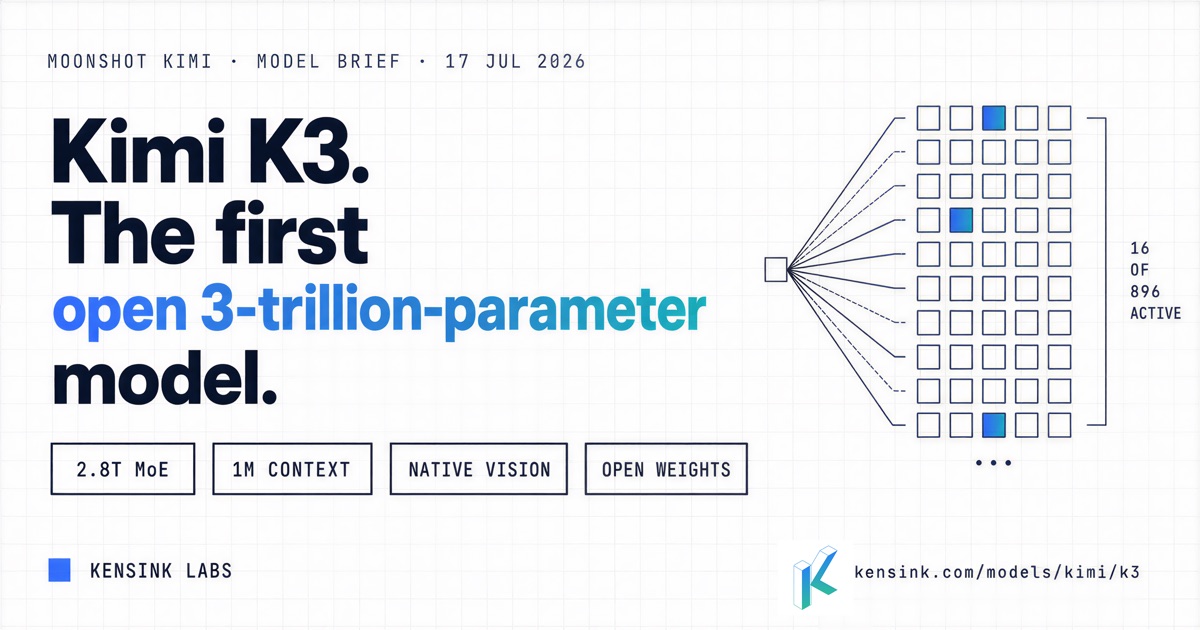
Kimi K3 for builders.
The measurements, configs, and tests that gate it.
The first open 3T-class model changes the question from cheap to capable. Here is where K3 fits your stack, the caching math that decides its cost, the drop-in config, and the seven-part acceptance suite to run before production.
Sovereign AI without the downgrade.
How to give staff real AI without shipping your data to OpenAI.
The choice between AI and data control is a false one. Here is how to give staff and customers real AI on models that run inside your own boundary, so nothing reaches OpenAI or Google.
The CX layer everyone skips.
Recovery is where the money is, and where the tools go quiet.
Helpdesks close tickets. They do not win back the customer who was about to leave. The recovery layer is where retention lives, and where most CX stacks go quiet.
The finance team you can't afford yet.
What an SME can hand to a business AI, and what to keep.
A small business cannot afford a finance team, but it still has to do the finance work. Here is what can move to a business AI, and what should not.
Building for farmers in Bangla.
Why the language barrier is the real adoption barrier.
The barrier to farmers adopting technology is rarely the technology. It is the language and the workflow. Building Krishok natively in Bangla is the point, not a feature.
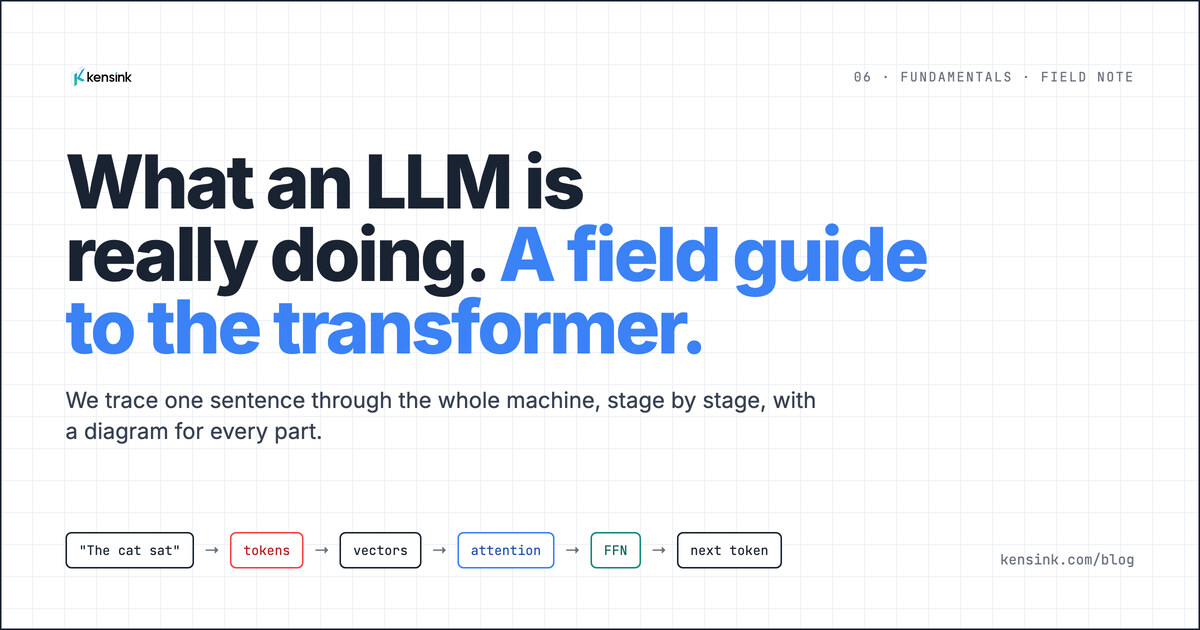
What an LLM is really doing.
A field guide to the transformer, one sentence at a time.
A large language model does one thing: it guesses the next token. We trace a single sentence through the whole machine, stage by stage, with a diagram for each part. Tokens, embeddings, RoPE, attention, multi-head, the feed-forward network, the residual stream, and the prediction loop.
How to calculate ROI
for an LLM project.
A CFO-friendly framework for sizing the payback on direct-LLM agent work, before you commit a budget. Five inputs, one output.
RAG vs fine-tuning:
which is right for you?
A short, opinionated decision tree. Most teams need RAG. A small minority benefit from fine-tuning.
The Frontier Firm playbook:
a twelve-week field guide.
How a 200-person company restructures its org chart around AI agents without firing anyone or burning a year of credibility.
Why most AI projects fail,
and what we do differently.
Six failure patterns we see in every audit, ranked by how much money they cost, plus the cheap fixes that prevent them.
Dispatch, don't paste.
How CEOs brief engineers in the age of AI.
AI gives you the tip of the iceberg in thirty seconds. The other ninety percent is what the K-Framework maps: users, outcomes, eval bars, data contracts, rollback paths, open decisions.